

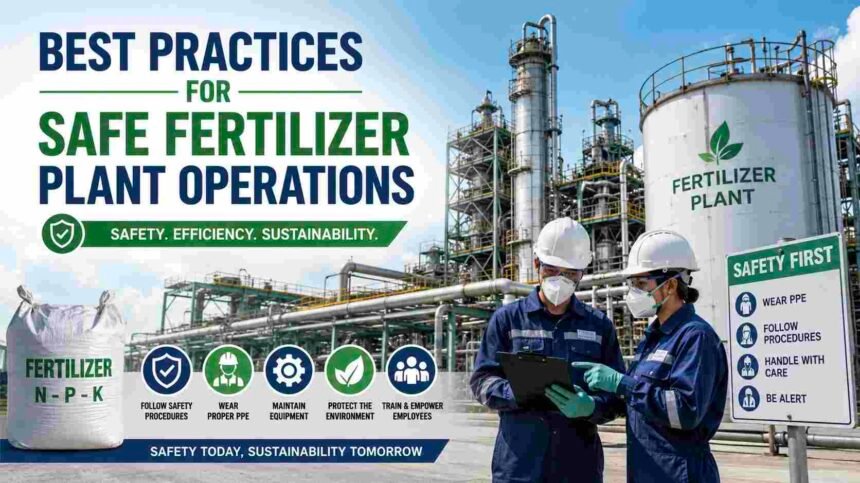
Fertilizer manufacturing is a cornerstone of global agriculture, providing the vital nutrients required to sustain global food production. However, producing chemicals like ammonium nitrate, urea, and anhydrous ammonia involves highly volatile substances, extreme temperatures, and intense pressures. Due to these factors, fertilizer plants operate under some of the most hazardous conditions in the industrial sector. Safeguarding these facilities requires more than mere regulatory compliance; it demands a comprehensive, proactive strategy to identify hazards, implement rigorous engineering controls, and foster a deep-seated culture of safety.
Adopting Process Safety Management (PSM)
At the heart of any safe chemical manufacturing facility is a robust Process Safety Management (PSM) framework. Because fertilizer plants handle highly hazardous chemicals, PSM standards dictate that operations must establish clear, documented Standard Operating Procedures (SOPs) for every phase of production. This includes detailed guidelines for startup, normal operations, temporary operations, and emergency shutdowns.
Managing change is also critical. Whenever equipment is modified or a process chemistry is adjusted, a thorough safety review must be executed to ensure new risks are not inadvertently introduced. By systematically analyzing process hazards, plants can anticipate failures and establish safety layers before incidents occur.
Advanced Ventilation and Containment
Handling the chemical precursors of fertilizers often releases toxic gases, reactive vapors, or combustible dusts. Implementing engineered ventilation systems, such as Local Exhaust Ventilation (LEV), is essential to capture airborne contaminants directly at the source before they reach workers.
In addition to atmospheric controls, physical containment systems must be established. Secondary containment areas, such as dike walls around anhydrous ammonia storage tanks and specialized spill basins, prevent chemical releases from spreading. Regular testing of gas detection systems and automated safety shutoff valves must be integrated into weekly maintenance routines to ensure immediate response during an accidental release. Furthermore, electrical systems in volatile areas must be fully explosion-proof to eliminate potential ignition sources near flammable dusts or gases.
Integrity of Piping and Infrastructure
The physical integrity of a plant’s distribution network is its primary defense against hazardous leaks. Fertilizer production involves highly corrosive compounds that can rapidly degrade standard metal alloys. Consequently, routine inspection and mechanical integrity programs are vital. Ultrasonic testing, pressure testing, and regular visual inspections help identify early signs of wall thinning or stress corrosion cracking in valves and pipelines.
For facilities prioritizing long-term durability, utilizing top-tier materials is crucial. Engaging with experienced fabricators, including those who design and install specialized industrial piping in Utah, ensures that systems are engineered to withstand the unique chemical and thermal demands of fertilizer production.
Employee Training and Emergency Readiness
Even the most sophisticated engineering controls cannot replace a well-trained workforce. Employees must undergo continuous, scenario-based safety training to ensure they understand chemical hazards and can recognize early warning signs of system deviation.
In tandem with training, a comprehensive emergency response plan must be actively maintained. This plan should define precise evacuation routes, establish clear communication protocols, and provide readily accessible personal protective equipment (PPE) and chemical neutralizing agents. Conducting regular, realistic drills ensures that personnel can execute emergency protocols calmly and efficiently, reducing reaction times and mitigating potential damage during an unexpected event.
Conclusion
Operating a fertilizer plant safely is a continuous journey that requires constant vigilance, strategic investment, and committed leadership. By implementing strict PSM guidelines, maintaining high-integrity piping systems, and empowering employees to prioritize safety over productivity, facilities can achieve both operational excellence and a hazard-free work environment. Ultimately, a proactive safety culture is the most effective shield against industrial accidents, protecting both the workforce and the surrounding community.