

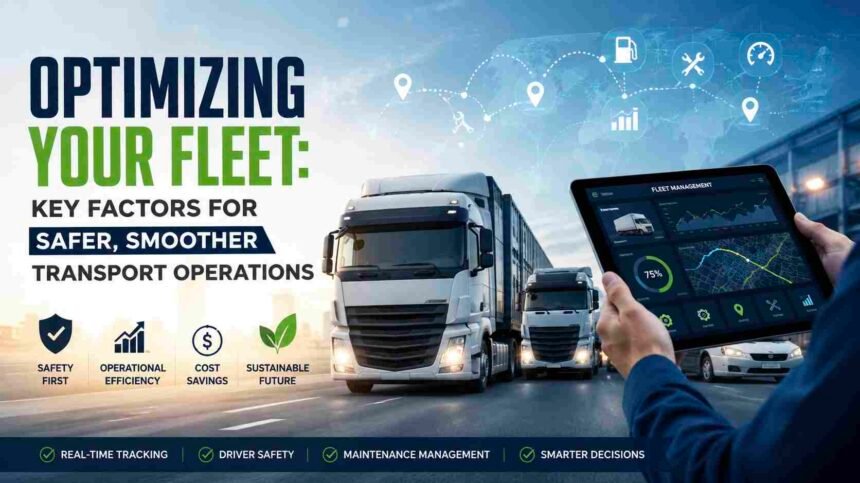
The logistics and transportation industry is the circulatory system of the modern global economy. Whether moving raw materials to a factory or delivering finished goods to a retail store, the efficient movement of freight is critical. However, managing a transport operation is fraught with challenges. From fluctuating fuel costs and tightening regulations to the ever-present risk of road accidents, fleet managers and owner-operators must juggle a multitude of variables.
Achieving a balance between speed, safety, and cost-efficiency requires a strategic approach. It is not merely about getting from point A to point B; it is about ensuring that the cargo, the vehicle, and the driver arrive intact and on schedule. Focusing on operational excellence can significantly reduce downtime, lower insurance premiums, and improve overall reputation. Here are six key factors to consider when aiming to elevate your transport operations.
1. Selecting the Right Equipment for the Job
One of the most common causes of transport delays and safety incidents is the mismatch between the cargo and the vehicle. Using a trailer that isn’t rated for a specific load weight or dimension can lead to mechanical failure, legal penalties, and catastrophic accidents. It is vital to assess your fleet’s capabilities against the specific needs of your freight.
For example, when transporting tall or exceptionally heavy industrial machinery, a standard flatbed often lacks the stability or vertical clearance required. in these scenarios, utilizing a lowboy gooseneck trailer is often the superior choice. These trailers are designed with a lower deck height, which lowers the center of gravity for heavy loads, drastically improving stability during transit. Furthermore, the detachable front allows for easier loading of powered equipment, reducing the risk of accidents during the loading and unloading process. By ensuring your fleet includes specialized equipment tailored to your cargo types, you build a foundation of safety from the ground up.
2. Implementing Rigorous Preventative Maintenance
Reactive maintenance—fixing things only when they break—is a strategy that guarantees inefficiency. A breakdown on the side of a highway is infinitely more expensive and dangerous than a scheduled repair in a shop. A robust preventative maintenance program is the first line of defense against unexpected downtime.
This involves more than just checking the oil. It requires a systematic approach to inspecting tires, brakes, hydraulic systems, and electrical components. Modern telematics systems can now alert fleet managers to engine fault codes in real-time, allowing for repairs to be scheduled before a failure occurs. Statistics consistently show that fleets with strict maintenance schedules see a reduction in fuel consumption and a significant extension in the lifespan of their assets.
3. Continuous Driver Training and Safety Culture
Even with the best equipment in the world, the human element remains the most critical variable in transport safety. Developing a culture of safety starts with comprehensive driver training that goes beyond the initial requirements for obtaining a Commercial Driver’s License (CDL).
Ongoing education should cover defensive driving techniques, fatigue management, and updates on changing traffic laws. Simulation training is becoming increasingly popular, allowing drivers to practice handling hazardous conditions—like ice, heavy rain, or tire blowouts—in a safe, controlled environment. When drivers feel supported and educated, they are more likely to make smart decisions on the road, reducing the frequency of preventable accidents.
4. Leveraging Route Optimization Technology
Efficiency in transport is often a game of miles and minutes. Traditional route planning, which might rely on static maps or driver intuition, is no longer sufficient in a world of unpredictable traffic patterns and just-in-time delivery expectations.
Investing in advanced route optimization software can transform operations. These tools analyze real-time data regarding traffic congestion, road construction, weather conditions, and even bridge heights to calculate the safest and most efficient path. This not only ensures timely deliveries but also reduces fuel consumption and wear and tear on vehicles by avoiding stop-and-go traffic or steep, difficult terrain.
5. Strict Adherence to Compliance and Regulations
The regulatory landscape of the transportation industry is complex and constantly evolving. From Hours of Service (HOS) mandates to weight restrictions and cargo securement rules, non-compliance can result in hefty fines, “out of service” orders, and severe damage to a company’s safety rating (CSA scores).
Successful operations treat compliance not as a burden, but as a framework for safety. This involves keeping meticulous digital logs, ensuring all permits for oversized loads are in order, and staying abreast of state-specific regulations if crossing borders. utilizing digital compliance management tools can automate much of this paperwork, ensuring that you are audit-ready at all times.
6. Mastering Load Securement Protocols
A load that shifts during transit changes the handling dynamics of the vehicle and can lead to rollovers or jackknife incidents. Improperly secured cargo can also fall onto the roadway, posing a lethal hazard to other motorists.
Mastering load securement involves understanding the physics of the freight. This means calculating the aggregate working load limit of your tie-downs to ensure they exceed the weight of the cargo. It also involves regular inspections of chains, straps, and binders for fraying or damage. Drivers must be trained to check securement within the first 50 miles of a trip and at regular intervals thereafter, as loads can settle and straps can loosen due to vibration.
Optimizing transport operations for safety and smoothness is not a one-time fix; it is an ongoing process of refinement. By investing in the right equipment, such as the appropriate trailers for heavy hauling, and prioritizing the human element through training and culture, companies can navigate the complexities of the road with confidence.
Taking a proactive stance on maintenance and compliance ensures that your fleet remains reliable and legal, while technology helps you stay ahead of logistical hurdles. As the demands on the supply chain continue to grow, taking the time to audit and upgrade your operational strategies will pay dividends in safety and success.